Nha Trang temple dress code is important for visitors since Nha Trang has many temples, pagodas, and shrines to explore. Dressing appropriately shows respect for these sacred places and ensures a comfortable, culturally respectful visit.
- Modesty principle: Clothing must cover shoulders and knees to show respect for sacred spaces and local culture.
- Stricter rules (Updated 2023): Major sites like Long Son Pagoda may deny entry to visitors wearing sleeveless tops or short clothing above the knee.
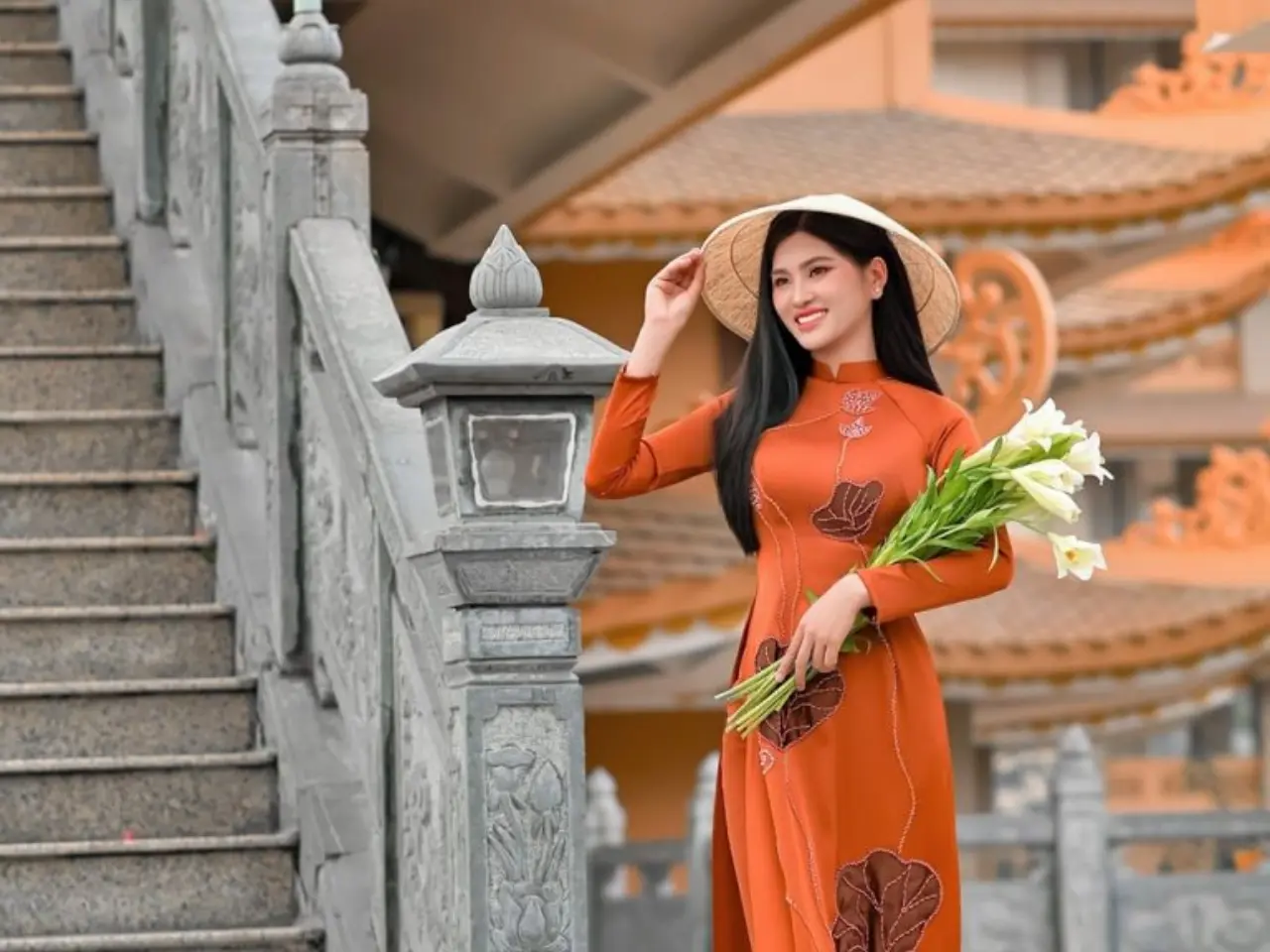
- Recommended outfits: Wear sleeved tops (T-shirts, shirts, polos), long pants, midi skirts, or traditional Ao Dai for a respectful appearance.
- Footwear & accessories etiquette: Shoes must be removed before entering main halls. Hats and sunglasses should also be taken off in worship areas.
- What to do if you are not properly dressed: Free robes are available at places like Po Nagar Cham Towers, or you can use a scarf/sarong to cover up temporarily.
- Local behavior rules: Keep quiet, avoid touching religious objects, and always ask permission before taking photos.
- Important note for visitors: Ao Dai is highly recommended for temple visits in Nha Trang. Comfortable walking shoes or sandals are best due to stairs at sites like Long Son Pagoda.
Why following the dress code matters in Nha Trang
Temples are places of worship and meditation, so modest clothing helps preserve a calm environment and shows respect for worshippers.
Respecting local rule, in Nha Trang sites like Long Son Pagoda, Truc Lam Hon Ba Pagoda may restrict entry or require visitors to cover up if clothing is too revealing, as a way to maintain proper decorum.
In Vietnamese tradition, wearing modest, simple, and non-flashy clothing in sacred places is considered a sign of respect toward Buddha and the spiritual space.
Dress code guidelines for women: Elegance and respect
- Wear tops with sleeves (short or long). Avoid tank tops, spaghetti straps, crop tops, or see-through clothing.
- Bottoms: Should cover the knees. Choose long pants, culottes, or maxi skirts. Avoid short skirts, beach shorts, or tight leggings.
Recommended outfits include simple and modest styles such as jeans or midi skirts paired with plain shirts or T-shirts. For a more respectful and culturally appropriate look, visitors can also choose Buddhist-style clothing or traditional Ao Dai, which are widely appreciated when visiting temples in Nha Trang.
Dress code guidelines for men: Neat and simple
- Tops: T-shirts or collared shirts with sleeves are acceptable. Avoid tank tops or sleeveless shirts.
- Bottoms: Trousers, jeans, or long shorts that cover the knees. Avoid swim trunks or very short athletic shorts.
Recommended outfits: Men can opt for simple and respectful combinations such as plain T-shirts with jeans, linen shirts with chinos, or polo shirts with long trousers for a neat and comfortable look when visiting temples in Nha Trang.
When visiting temples in Nha Trang, it is best to choose neat, simple, and modest clothing that respects the sacred atmosphere. Avoid overly bright, flashy, or revealing outfits, and opt for clean, minimal styles to ensure a comfortable and culturally respectful experience.

Hats, sunglasses & footwear etiquette
Visitors are advised to wear comfortable walking shoes, sneakers, or sandals, especially for sites with stairs like Long Son Pagoda. However, all footwear must be removed before entering the main sanctuary (Chính điện) and should be placed in the designated shoe racks at the entrance.
In addition, hats and sunglasses should be removed before stepping into worship areas when offering incense or praying, as a sign of respect and to maintain the sacred atmosphere inside the temple.
What to do if your outfit doesn’t meet the code?
If you realize your clothing is too revealing upon arrival, do not worry. Many popular destinations in Nha Trang offer solutions to help you visit without disrespecting the site.
At Po Nagar Cham Towers, the management often provides free traditional gray robes for tourists. You can temporarily wear these over your clothes to enter the towers. Another tip is to always carry a light scarf or sarong in your bag. This versatile item can quickly cover your shoulders or wrap around your waist to hide your knees when needed.
Nha Trang temple attire comparison table
Use this quick reference table to ensure your luggage includes the right items for your spiritual tours.
| Item Category | Recommended Choice | Avoid These Items |
|---|---|---|
| Upper Body | T-shirts, polos, blouses with sleeves | Tank tops, singlets, crop tops |
| Lower Body | Long pants, maxi skirts, midi dresses | Mini skirts, short shorts, leggings |
| Accessories | Scarf/sarong, socks | Flashy jewelry, hats inside altar areas |
Planning a Nha Trang city tour is the best way to visit multiple sites like Long Son Pagoda and Po Nagar in one day while staying prepared for these requirements.
Additional etiquette rules when visiting temples in Nha Trang
When visiting temples, pagodas, or sacred sites in Nha Trang, visitors should follow a few simple etiquette rules to show respect and ensure a peaceful experience.
- Keep your voice low: Maintain a quiet tone and avoid loud talking or laughing, as temples are places of worship and meditation.
- No disruptive behavior: Avoid running, playing music, or taking photos in restricted or sacred areas unless clearly allowed.
- Be respectful when taking photos: Always check for signs or permission before taking pictures, and avoid posing in a way that may be considered disrespectful.
- Do not touch sacred objects: Statues, altars, and religious items should not be touched or moved.
- Follow local instructions: Always comply with temple staff or posted guidelines
FAQ – About temple dress code in Nha Trang
Before visiting temples and pagodas in Nha Trang, many travelers have common questions about what is appropriate to wear and how to behave. Below are quick answers to help you prepare for a respectful and comfortable visit.
Can you wear shorts to temples in Vietnam?
Shorts are generally not recommended, especially if they are above the knee. Most temples require modest clothing that covers shoulders and knees.
Is it okay to wear jeans to a Buddhist temple?
Yes, jeans are acceptable as long as they are neat, not ripped, and paired with a modest top.
Is there a dress code for temples?
Yes, visitors are expected to dress modestly by covering shoulders and knees and avoiding overly revealing or flashy clothing.
Is it okay to wear red in temple?
Yes, wearing red is generally acceptable as long as the outfit remains modest and not overly flashy or revealing.
Can tourists wear an AO-DAI?
Yes, Ao Dai is welcomed and even encouraged as a respectful and elegant traditional outfit when visiting temples in Vietnam.
To explore Nha Trang temples comfortably and learn more about local culture, you can join a guided experience with Sea You Travel, designed to help travelers discover the city in a more convenient and meaningful way.